

NOTE: This is material adapted from a public presentation I (Jamie Robe) made at the Unitarian Universalist Church of Tampa on August 30, 2026.

Thank you for inviting me to speak today. It’s a real honor to be here. Some of you know me as the guy who plays the guitar and works on the sound system and endlessly talks about computers. I want to tell you that I am not a meteorologist, or an economist, or a climate scientist – but I am an engineer.
In the next 23 minutes I am going to try my best to tackle two “lite” subjects: save people from hurricanes and solve the global climate crisis. Sorry folks…it is the engineer in me.
So I’ll open this discussion here by reminding you what Rev. Bob Murphy says all the time – when someone asks you what the geeky guy at church talked about today you can say he talked about seat belts, explosive hurricanes, something called a teraton, and threw in some sci-fi at the end.
I have a couple questions here for everybody – raise your hand yes or no.
- How many of you have gone through a strong hurricane?
- How many of you are prepared right now if we are hit by a category four or five storm and you lost electricity and access to stores and water supply for 2 weeks?
- Would your windows, doors, and walls be intact if I set up a cannon in your front yard and loaded it with a 8-ft long 2X4 and shot it at 50 ft per second at your house?
- How many of you understand the real scope of the costs of fixing the climate crisis?
- And lastly, raise your hand if you wore a seatbelt coming here this morning?
Why is it that instinctively buckle-up in our vehicle, but we are not doing the equivalent for our annual hurricane threat or the longer-term existential threat of climate change?
It’s because buckling up is a simple to-do, automatic, zero friction action. It’s also backed up by some laws for Toyota, Tesla, Ford…to put seatbelts in all cars, and fines that happen if you get caught not doing it. And it saves 15,000 people in the US each year.
In the 1940s and 50s seatbelts were fought tooth and nail by the car industry. Car companies were afraid that would make cars seem too dangerous, hurting marketing. They were blaming the drivers 100%.
It wasn’t until 1959 that engineer Nils Bohlin at Volvo invented the three-point seat belt system that we all have today. BTW Volvo gave the design freely to all their competitors – basically a 1959 version of open source. Keep these ideas about seat belts as we go into the next part of this talk.
Understanding the hurricane threat
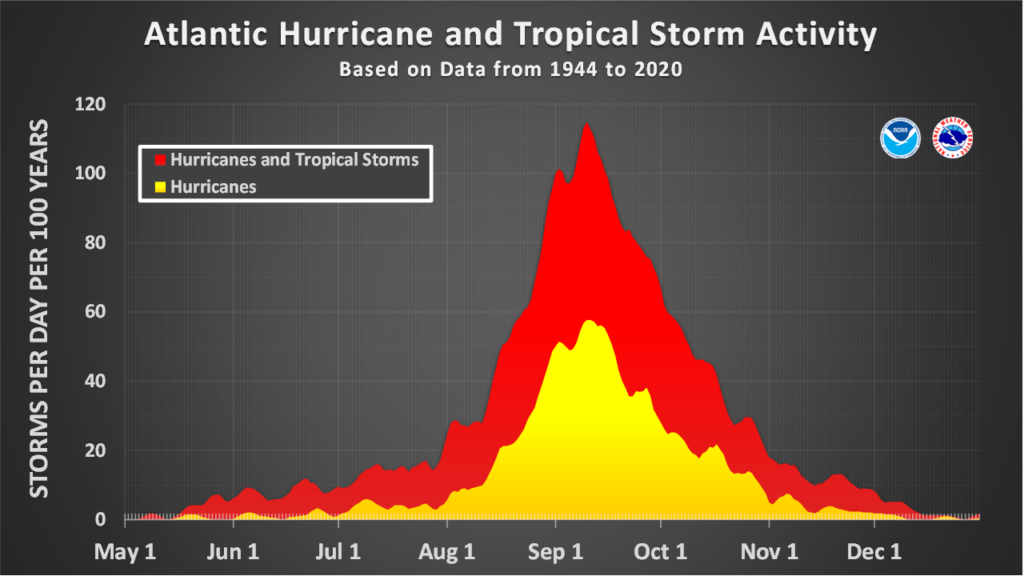
The slide that you’re looking at right now is called the campfire slide and it shows the hurricane season in the Atlantic basin. Tropical Cyclones take place all over the globe, but our season here in the Atlantic basin is June 1st to November 30th. These systems can theoretically take place at any time during the year, if conditions are favorable. As of this presentation in late August we’re just now starting to get towards the active part of the season.
I’m going to share a few images here from our recent experience with the Hurricane Milton that happened in 2024. Milton hit just two weeks after Hurricane Helene brushed past us about a hundred miles offshore but it actually flooded thousands of homes in theTampa Bay area and along the Gulf coast of Florida.
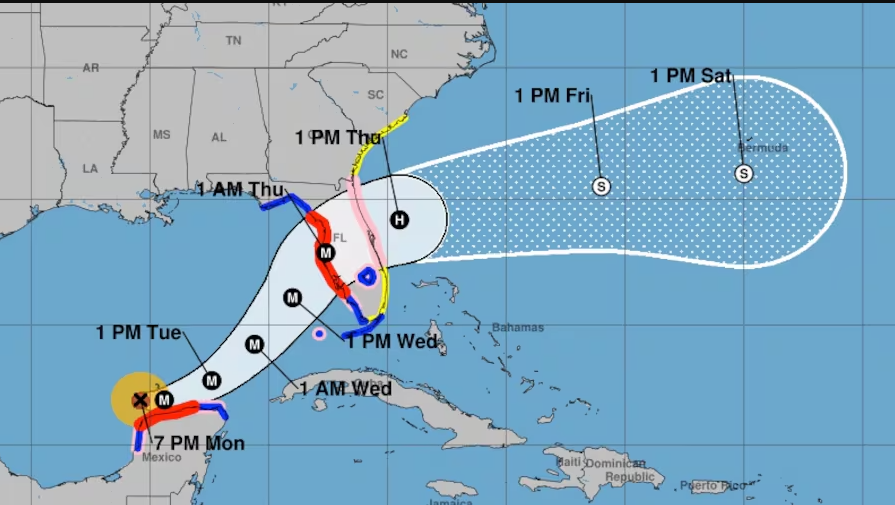
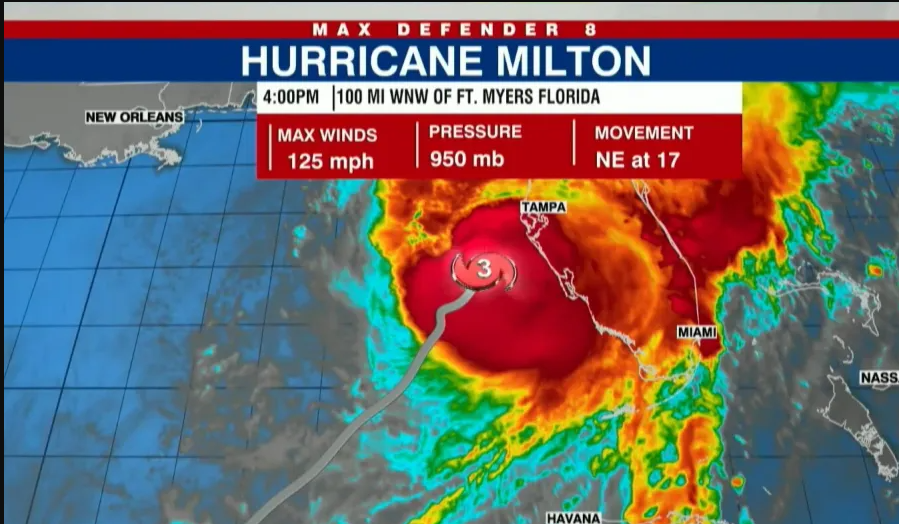
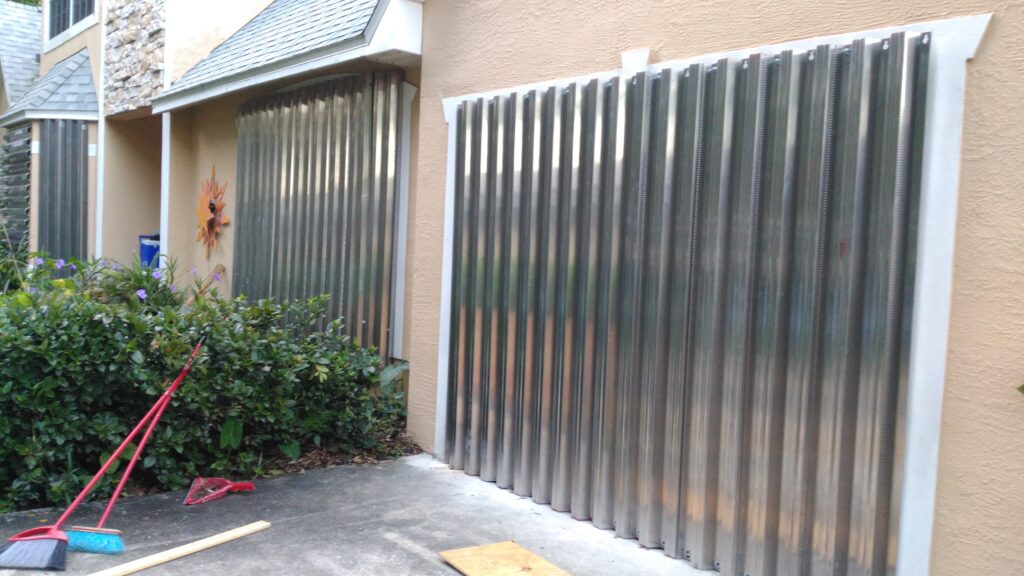
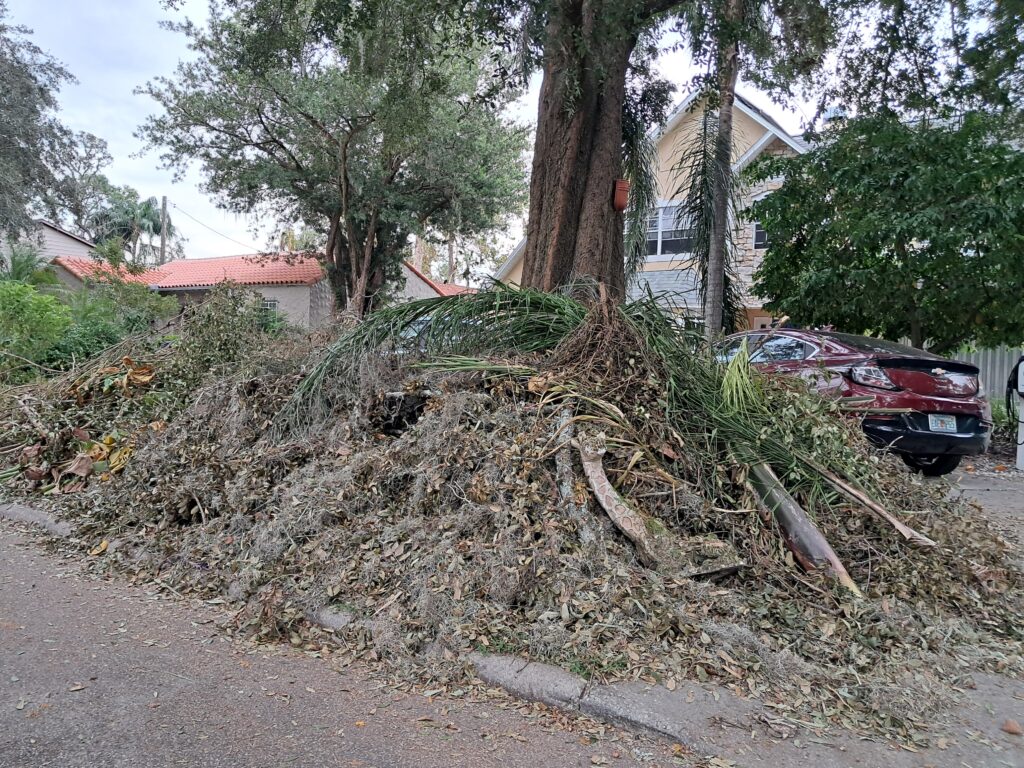
- Milton was one of those storms that forms near Mexico and travels east across the Gulf.
- It had explosive intensification to Cat 5 with 180mph winds.
- Milton posed our worst case scenario here in Tampa, as it came up from the Gulf – we’re really vulnerable to storm surge. Historically in the past there have been times where the Pinellas Peninsula next to us has been completely inundated with just a few Islands sticking up – the Gulf connecting to the bay.
- Milton was the fourth most intense Atlantic hurricane on record, and it did create a storm surge of 10 ft just south of Tampa Bay. It dove south of the Skyway so it actually created a counter or a reverse storm surge in the bay.
- Milton was the strongest cyclone to occur worldwide in 2024.
- It spawned the most deadly tornado outbreak from a tropical cyclone ever recorded.
- Milton killed 45 people unfortunately.
Personally, in 2024 we lost power for 6 days, lived under a boil water order, and one of our daughters had her apartment ruined by storm surge on the Hillsborough River.
In this next image we are reviewing some of the costs of hurricanes. Keep in mind, these dollar amounts are physical damage, not people. Overall in the US, the damage from tropical cyclones is about 50% of all weather related damage. That includes severe storms, tornadoes, wildfires, floods, and even heat waves.
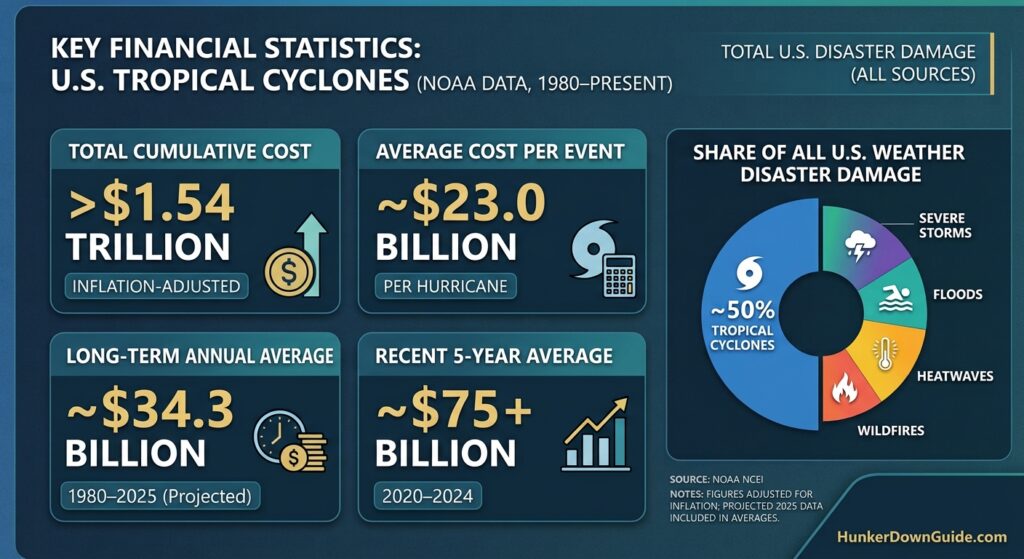
Average cost per storm is $23 billion – now that sounds like a lot but it’s actually going up. The average annual cost from 1980 to 2025 has been $34.3 billion. That’s definitely going up as in the past 5 years the average has been $75 billion per year.
We get a sense of this trend in the next image which shows 4 spike years:
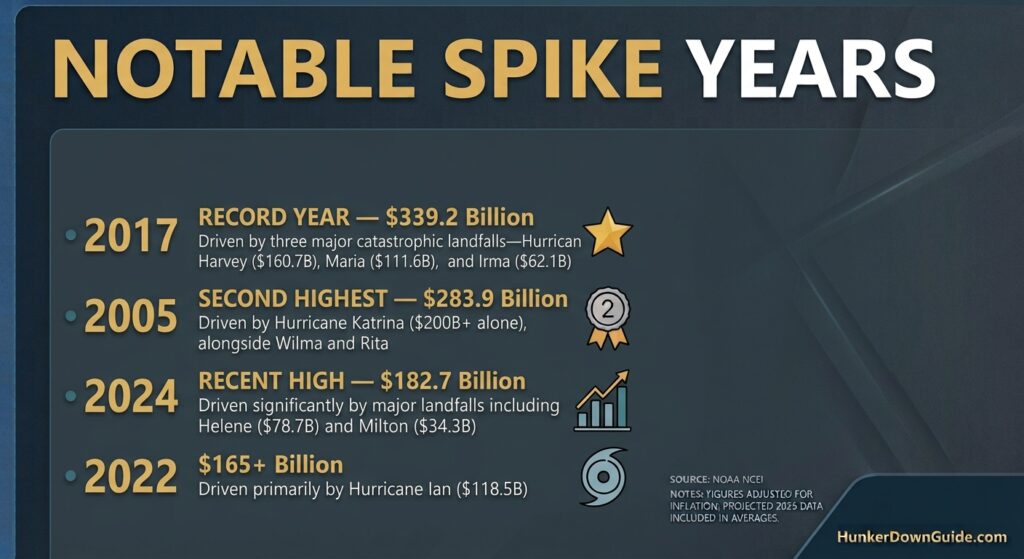
- 2017 ($339.2 billion): Record damage caused by Hurricanes Harvey, Maria, and Irma. Hurricane Maria devastated Puerto Rico, resulting in over 2,975 deaths.
- 2005 ($283.9 billion): Historic destruction primarily from Hurricane Katrina in New Orleans and surrounding areas ($200+ billion, over 1,300 deaths), along with Hurricane Stan in Central America (1,600 deaths).
- 2024 ($182 billion): Significant damage driven by Hurricanes Helene and Milton, resulting in 442 total fatalities.
- 2022 ($165 billion): Major impact from Hurricane Ian, with overall tropical cyclone activity causing 319 deaths that year.
At this point, regardless of our politics or personal beliefs, I think we can all agree that these storms are dangerous and hurricane preparation is very important. So let’s talk about one form of “seat belt”.
I have given this a lot of thought because this is something that I’ve been involved in my entire life living here in Florida and dealing with the storms. As the head of a family and also an engineer, I’ve given it enough thought that I actually wrote a book, “Day Before Disaster”, where I talk about practical prep steps including water supplies, power, evacuation planning, and so on for regular people.
The single most important thing I found is not about buying flashlights or generators or whatever; it is the mindset that we have.
Here is a slide that I created that shows a path forward. It’s people who take proactive action that survive disasters. I don’t even like the word “disaster” because a disaster is what’s happening to our man-made world, not to the natural world. In the natural world, this is just part of it, but given how and where we choose to live, it does do terrible damage to our infrastructure and our lives.
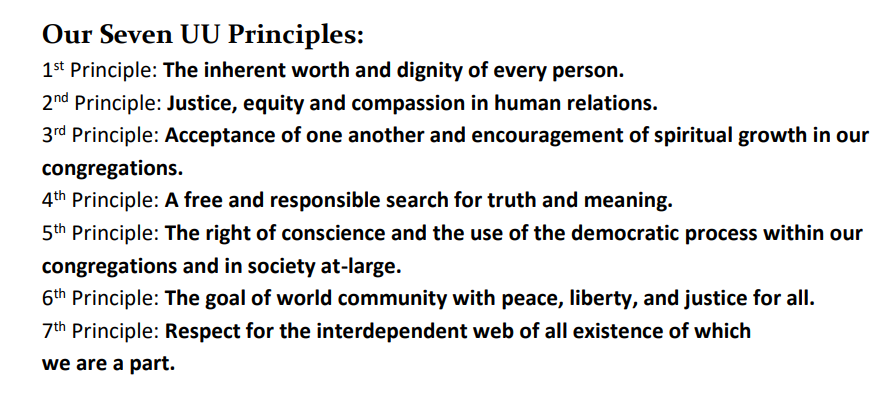
Since we’re talking about this in a UU church, let’s look at some of the Unitarian Universalist principles. Principle 1: The inherent worth and dignity of every person. Preparing for storms is a source of strength and shelter for vulnerable people. In our case, we have a small, low-cost generator that has lasted for 10 years and we’ve had to use it multiple times. In Milton, we had to run it for six days, and we ran extension cords to multiple houses around us because other people did not prepare. We tried to keep their refrigerators going and get them some electricity, and our son set up a phone charging station at our mailbox for anyone who walked by.
The 7th principle is respect for the interdependent web of all existence. Hurricanes remind us that we are part of nature, and nature does not negotiate—it just functions, and we are linked to our planet and its climate.
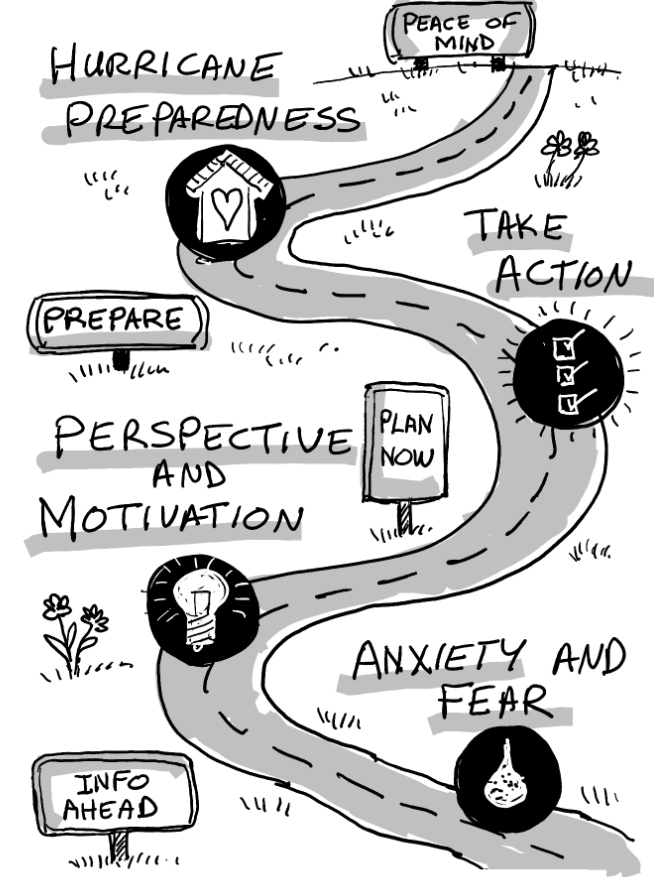
We’re going to talk for a second here about this mindset thing. Denial and delay stem from fear, and that creates the procrastination that I mention in the title of my book. Mindset can transform this procrastination and panic into calm, deliberate action, and that’s what we need in any kind of disaster situation.
I did develop some free resources for people on the website hunkerdownguide.com, so I invite you all to go there. Just put your email address in and create a login to get access to the podcast, the videos, the 2 free courses, and the weather center resources.
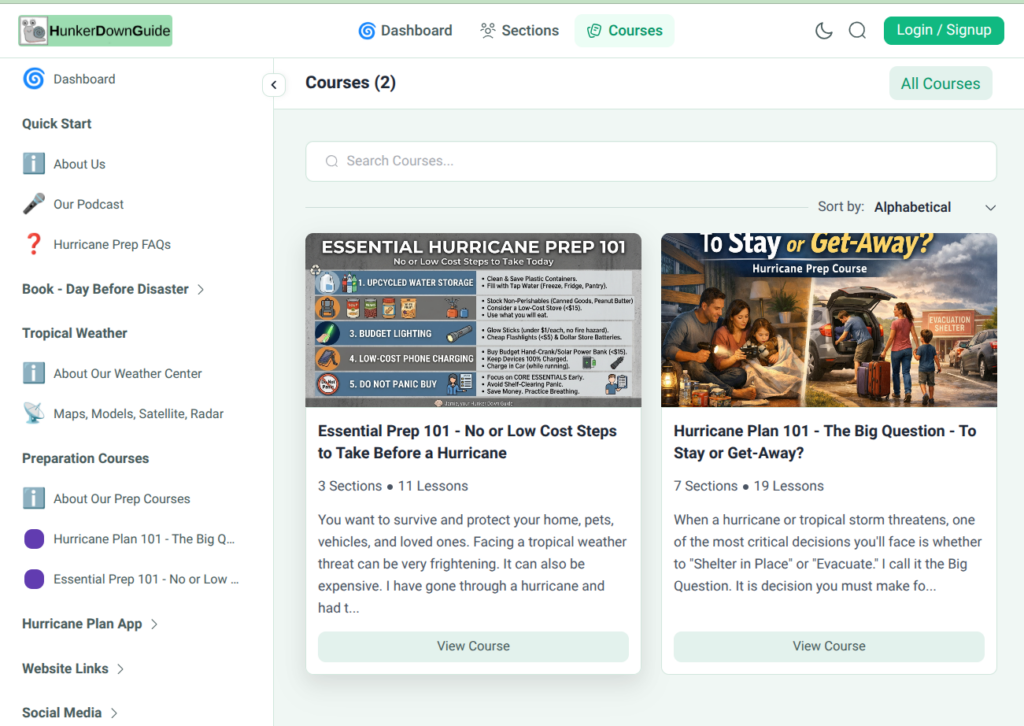
The free course called “Stay or Get Away” is from the step one chapter of my book – it’s the most important thing. You have to know if you are in an evacuation zone or a flood zone, and you need a Plan A and a Plan B. If you aren’t sure about that for yourself, take a look at that. People drown because they don’t know or don’t act.
The other course I have on the site is “Essential Prep 101.” I have five simple, low-cost things you can do to help you prepare. You don’t have to spend a ton of money to survive; you have to use your brain.
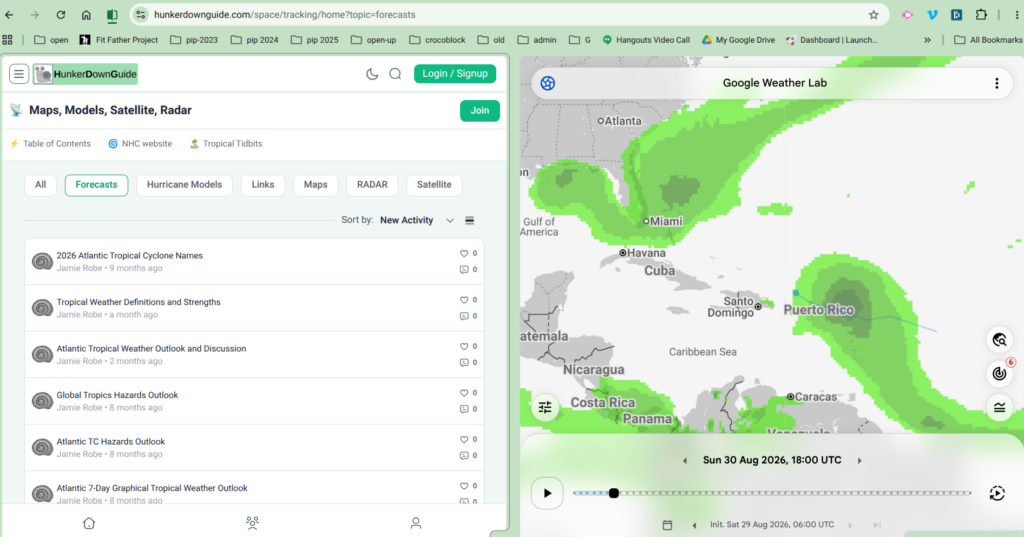
You also have to stay aware. Of course, the number one source is the National Hurricane Center, but there are also tons of local news and weather channels that are great. My system automatically updates all sorts of maps, resources, and links to things that I look at all the time. If you want to see some cool stuff, check out the Weather Center feature—I even have a link to the Google Weather AI model, which is really exciting to look at.
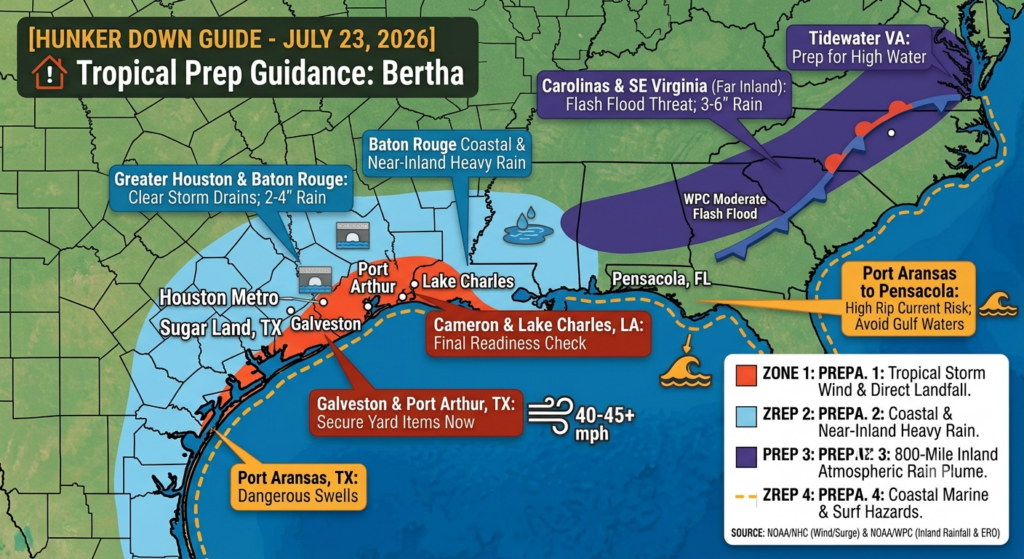
I am working on developing more advanced apps, including what I am calling a PrepCast. Here is an image that gives you a simple idea—it’s a PrepCast, not a forecast. The engineer in me can’t help but build this stuff.
That was the “easy” part of the presentation. The next 10 minutes are going to be harder to deal with, but let’s go forward.
Perspective storms stronger? Temperatures hotter?
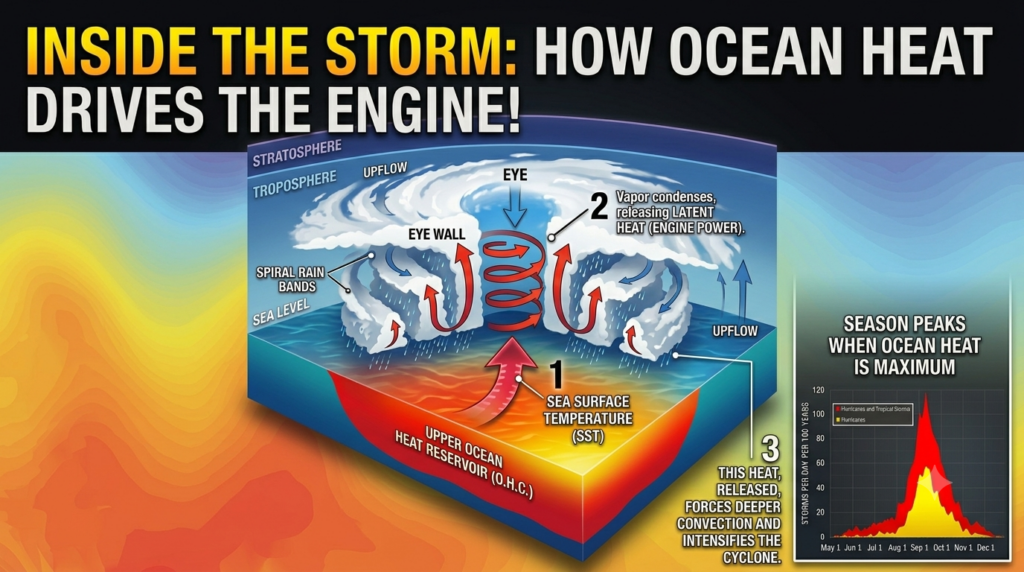
This next slide shows the heat engine, which is what a hurricane really is. It’s driven by warm ocean temperatures, humidity, and tropical atmospheric conditions—that’s what makes hurricanes run. Logically, if ocean and air temperatures go up, hurricanes will be more powerful. They will become more frequent.
And, of course, things are getting hotter. Does anybody know what we celebrated on August 22nd, just a week ago? On August 22nd, 2026, the European Union’s Copernicus Climate Change Service recorded a global average surface temperature of 21.1°C—the hottest in recorded human history. A terrible thing to celebrate.
Now, the problem with greenhouse gases and global warming is that 90% of the excess heat goes straight into the oceans, and our ocean systems are starting to bite back.
Connecting our oceans to hurricanes: hotter oceans mean supercharged hurricanes, rapid overnight intensification, and extreme inland precipitation. This is getting worse every year. As sea levels rise, we’re going to have problems with saltwater intrusion into our aquifer, increased erosion, and destruction along the coast. This is no longer a distant projection for our grandchildren—it’s the reality of this hurricane season, the next, and the next.
The next slide shows annual weather-related fatalities, ranked from lowest to highest. Let’s look at where hurricanes fall here. Lightning, of course—Florida is supposedly the lightning capital—kills about 20 to 25 people in the US, and 20,000 to 24,000 worldwide.
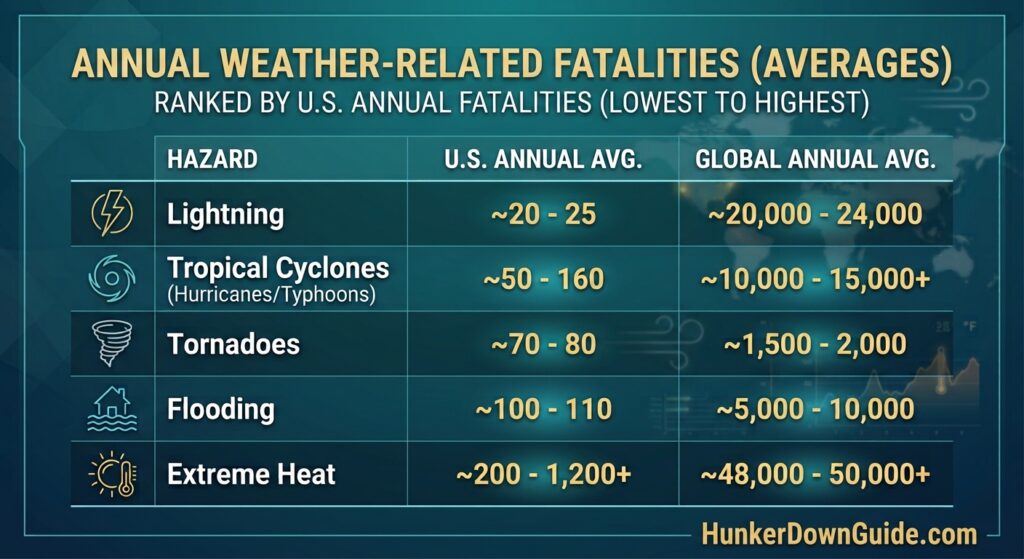
Tropical cyclones, which include hurricanes, kill an average of 160 people in the US and 15,000 or more globally.
Tornadoes kill 70 to 80 people in the US and 2,000 worldwide.
Flooding kills 110 in the US and 10,000 worldwide. There was just a massive glacial collapse in Nepal, with thousands missing or killed. A direct result of increased temps.
And the worst of all is extreme heat, which kills hundreds, if not thousands, in the US every year, and 50,000 or more globally. We don’t even know how many.
I don’t want to downplay the threat to life that tropical cyclones pose. While we average “just” a few hundred fatalities in the US, there have been horrific cyclone storms. In 1970, the Bhola cyclone in East Pakistan (now Bangladesh) killed over 500,000 people with a 33-foot storm surge. Even in our own country, the 1900 Galveston, Texas hurricane killed 12,000 people, making it the deadliest natural disaster in US history. Thousands died in Florida in past hurricane strikes to the Keys and Lake Okeechobee.
Just a couple of months ago, Europe had a single heatwave that killed 35,000 people.
What is killing people in heatwaves? Unsustainable heat. There’s a limit to what human bodies can handle. We’re starting to see extreme heat indexes over 100°F. When it reaches 103°F to 124°F, that’s dangerous, and direct sunlight in Florida can add another 15°F to the heat index. An index above 125°F is beyond the tolerable level, meaning exposure without air conditioning will likely be fatal.
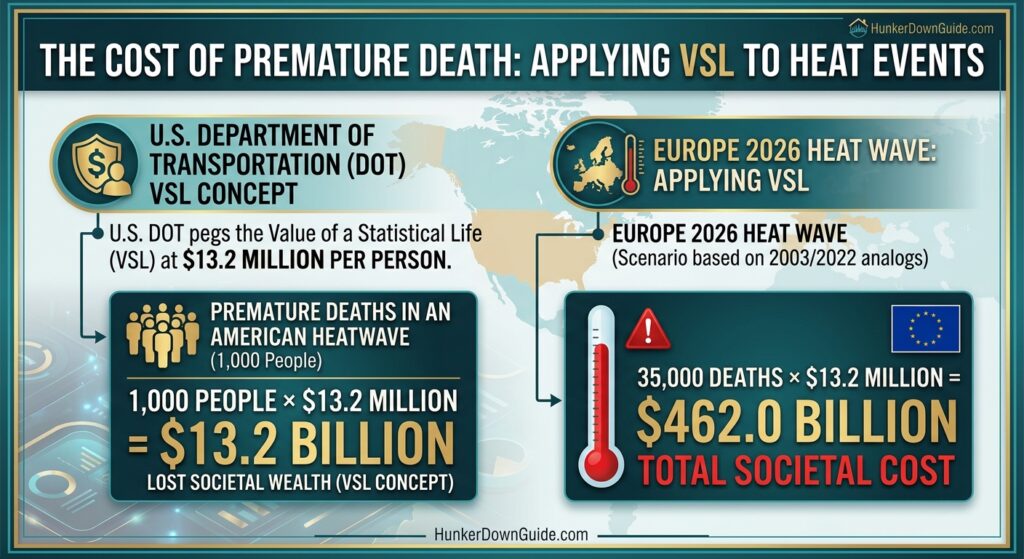
We saw earlier the physical costs of hurricanes, which run into the billions. But look at this next image on the VSL, or Value of a Statistical Life. It’s not exact, but it’s a metric the government uses to figure out how much to spend on saving lives. If the VSL for a person is $13.2 million, then a thousand people dying in a US hurricane, flood, or heatwave represents a $13.2 billion loss. This is the collective societal loss.
If 35,000 people die in Europe, multiplying that by $13.2 million yields $462 billion in societal costs. Beyond the tragic loss of human life, it reflects massive economic impact. But it gives us a better way to measure the true cost, not just the destroyed buildings, crops, or baseball stadiums.
Systemic Failure + Solutions
I’m going to leave that VSL slide up while I talk about this next section on what we can actually do, because there are solutions. Now, some of these solutions might sound crazy, far-fetched, or even like science fiction, but this is a massive, unprecedented problem that requires new ways of thinking.
As human beings, we live day-to-day, grounded in our community, family, and spirit, but 99% of us are seemingly swept up in economic survival all the time—how to get health insurance, hold down a job, pay for an education, fill up our gas tank. But this is a system we created; the economic and technological systems are ours, and we have to own them.
We have a scarcity mindset forced on us that controls us. I personally have come to believe that it is used to keep us working, producing, creating wealth for corporations.
Buckminster Fuller, who invented the geodesic dome and was a UU, clearly calculated in one of his books that if all the resources from the Earth were spread out, all 8.3 billion of us on Earth are billionaires.
Think about it: we all know the stock market. If the S&P 500 goes up 120 points, that’s a trillion dollars in corporate wealth. The problem is that the top 1% owns 58% of the market, the top 10% owns 93%, and the bottom 50%—which is probably a lot of us sitting here—owns just 1% of that corporate wealth.
Now, I don’t know the exact way we need to set things up economically, but we have another major problem: people are afraid of AI, but we already have artificial humans—they’re called corporations. Both corporations and governments are focused on the short term, but we need long-term stewardship. Even Thomas Jefferson back in 1819 wrote that we ought “to crush in its birth the aristocracy of our monied corporations, which dare already to challenge our government to a trial of strength and bid defiance to the laws of our country.” Back then, states would only charter a corporation for 10 to 30 years for a specific purpose.
Things changed on January 21, 2010, when the US Supreme Court ruled that corporations could spend unlimited money on political PACs as a First Amendment right, treating them like natural human beings. That’s scary.
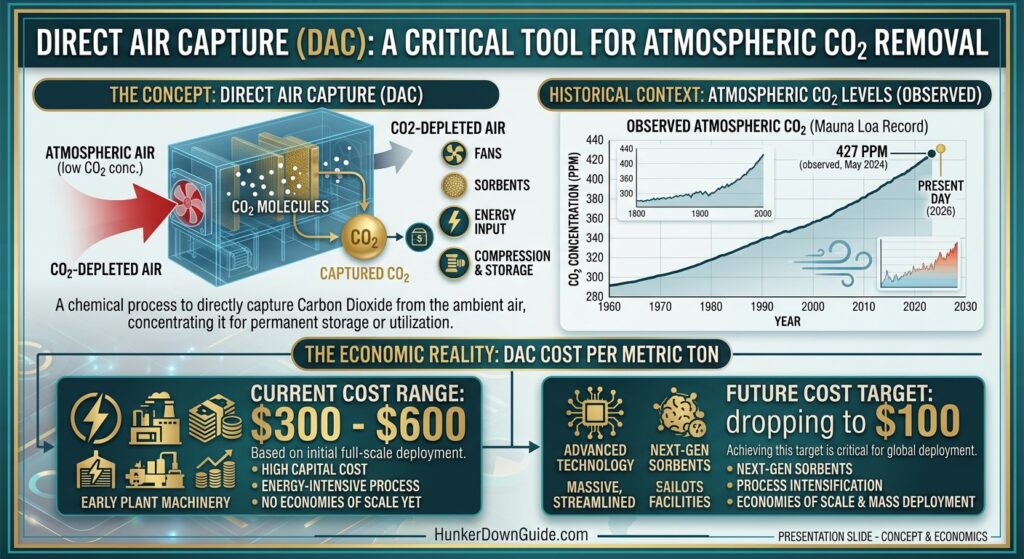
I’m going to throw up a couple more slides here because we’re running long, but let’s look at this one called Direct Air Capture. This is a technology—without going too deep into how it works—where you grab carbon dioxide from the air and store the carbon away forever. Right now it costs around $300 to $600 a ton, but in the future, it could drop to $100 a ton.
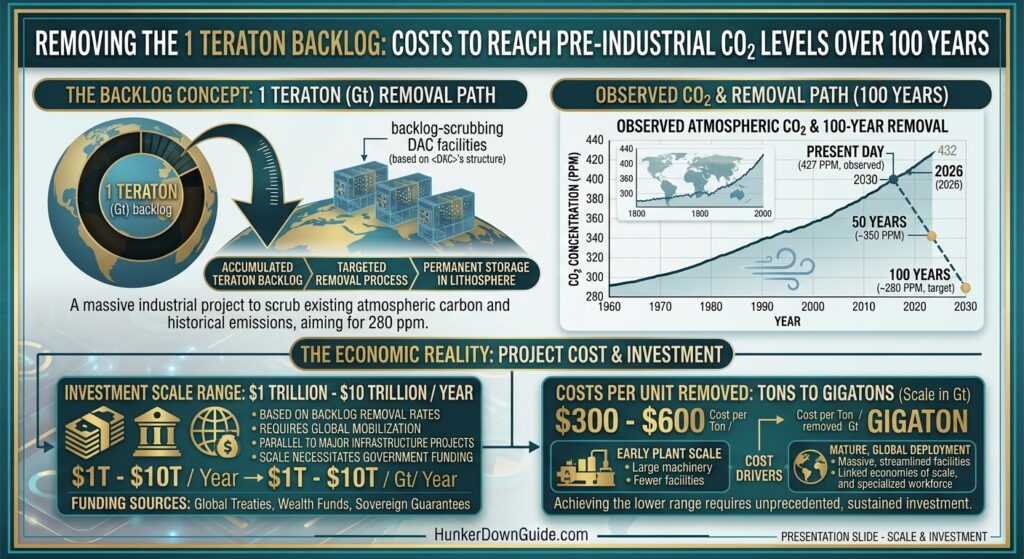
This slide shows that we have a backlog of one teraton of CO2 . A teraton is one trillion metric tons. All the fossil fuels burned, all the forests destroyed, and the ecosystem destruction over the past 100+ years. It has caused massive damage and is going to cost roughly one quadrillion dollars—that’s 1,000 trillion—to fix. You’re probably thinking, “Jamie, you’re crazy, that’s way too much money.”
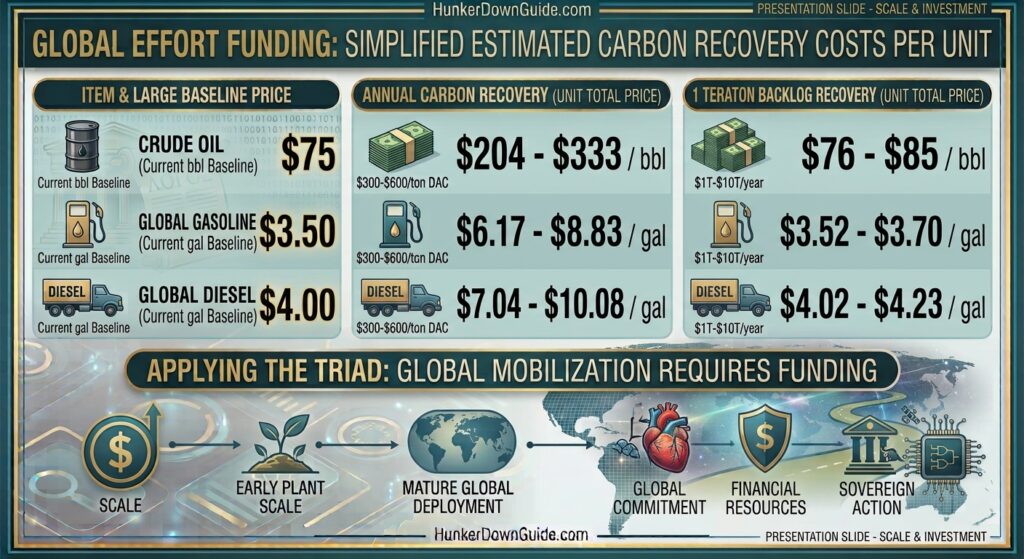
Fossil fuels and non-renewable technology can never be cheap. The costs are really there but hidden from view… or maybe we look away. Gasoline and Oil really are costing us at least twice as much as the purchase price.
Every year we spend trillions of dollars on all sorts of things—we’re talking about spending $1.5 trillion on the War Department alone next year. We need a completely new way of doing things.
My next image is about just one thing we can do to help: How many of you drive EVs right now? (How many have solar panels at home, grown some of your own food, recycle, or just reduce your consumerism?)
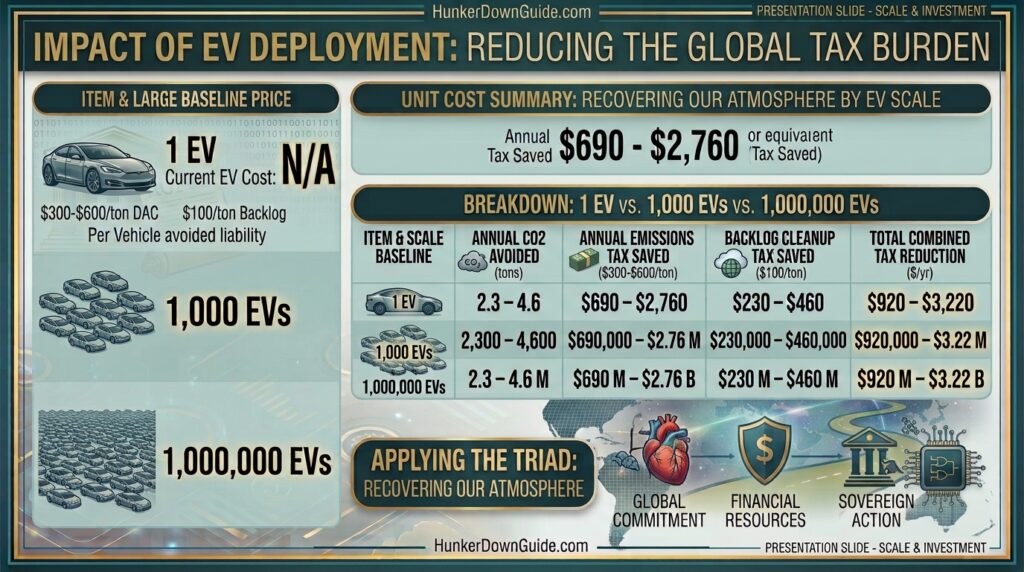
Okay, well, you know, I know what one person does sometimes doesn’t seem to make a difference, but here’s why driving an EV makes a difference. Why do we have a teraton of carbon dioxide? How does that get there? Well, there are lots of different mechanisms, but you know what? Every gallon of gasoline weighs six pounds. When you burn a gallon of gasoline, it creates 20 pounds of CO2. So in 10 years, your two-ton (4,000 lb) vehicle generates 46 tons of CO2. If we had 1 million EVs, we would reduce the amount of money we have to spend to clean CO2 up by $3.22 billion, so you can see it adds up. So, on the next slide, it’s a moral question—right and wrong. We can look back into Genesis about the Noah’s Ark story and all sorts of other things, but let’s just keep going here. We are flawed, but we have an opportunity to make this change in order to fix this.
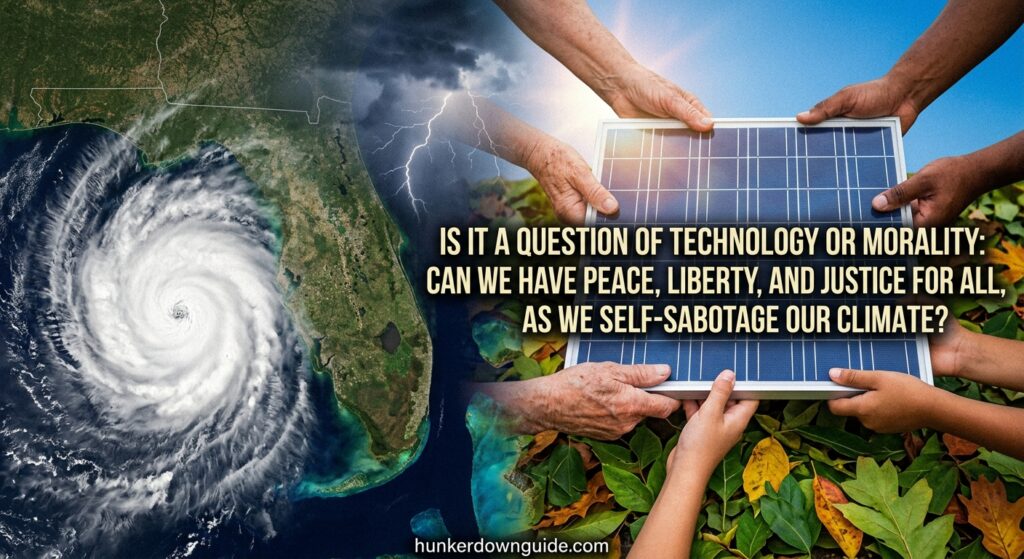
In order to fix this, we need our climate seat belt. We need a new system that helps us overcome our human flaws. This has to be the dawning of a new age: a true planetary change to sustainability and human rights.
Because how can you have human rights and justice if you’re destroying our very climate, our very home? We won’t be here if we don’t do something.
Okay, now, $10 trillion a year for a hundred years—that’s a quadrillion. Think about it: sound impossible, but you know what? That’s jobs, that’s spinoffs, that’s technology that could cure disease, help us grow intellectually, make the eco systems come back to life. This is developing cheap, clean energy; this is investing in our collective future. It’s estimated that there would be 500 million jobs just working on this project alone in history. And where are we going to get the energy for this?
We have to develop new things. We’re working on fusion reactors. The moon has helium-3 (He-3) in its soil and can be mined; this could be a non-radioactive type of fuel for future fusion reactors. It is not found on Earth.
The Moon also has 20% silicon in its soil, and that could be used for solar panel production. Rare earth elements—you hear that talked about—it’s loaded with that, too. 265,000 miles away and we have been there in 1969! We just flew around it. We can do it.
There are even asteroids floating around the sun that are full of metals and things that we need. There’s one called Psyche, which we actually have a NASA probe on the way to, and it should get there in the year 2029 just to survey it. It has been estimated that Psyche has $10 quintillion—that’s 10,000 trillion, okay, or 10 times the entire global GDP—of metals in one asteroid. We could mine that. Now, of course, the technology to do this doesn’t exist yet, but it can be built. But how are we going to do it?
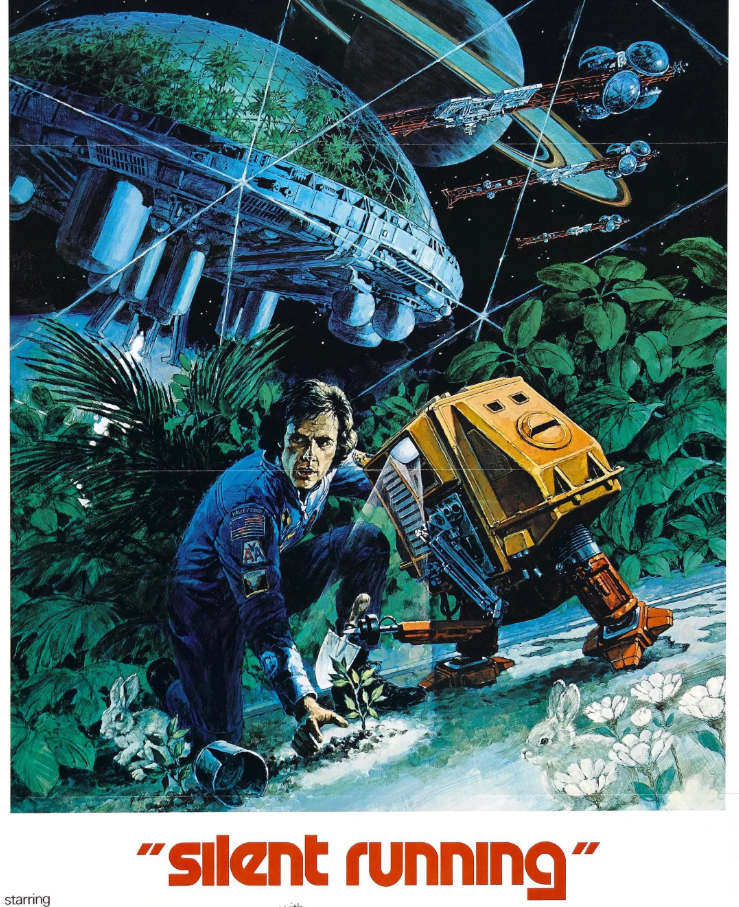
Personally, I learn a lot from ancient writings as well as our new mythology… scifi.
We have to be a spark. This little place that we’re at—you as an individual – have to be a spark to light the way, just like the people at the UU church who went to Nazi Germany to get people out who were going to go to the death camps. We have to be like that. We have to be like the people who walked with Dr. Martin Luther King. We have to be like the people who helped to run the Underground Railroad in slavery days. This is not easy; this is life-and-death stuff.
So you got to focus on real issues. We got to forgive people that have done this; we got to forgive ourselves because we are the ones – no one else to blame. We got to love this planet, and we’ve got to act. It’s your choice now…